
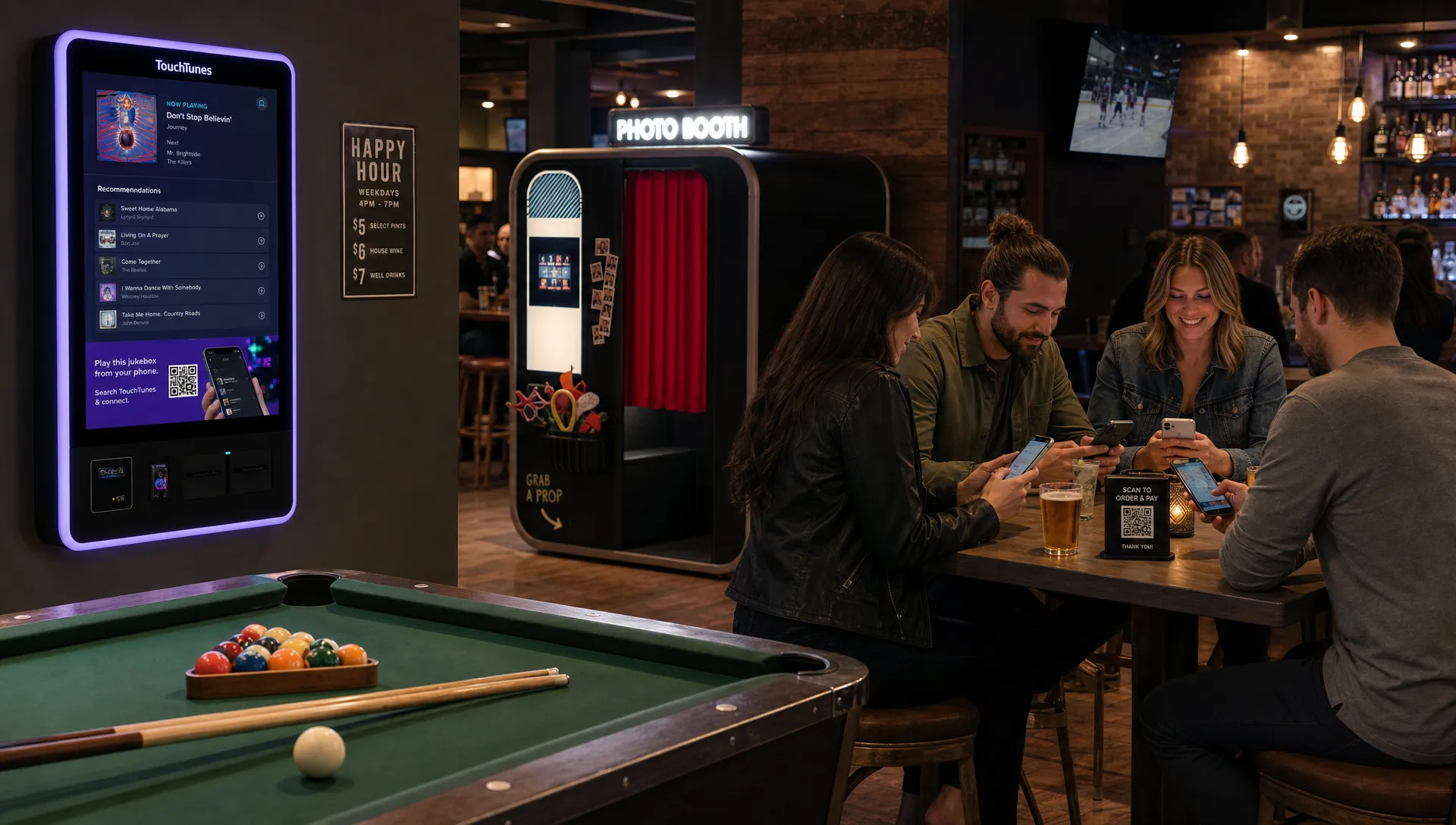
A jukebox used to be a corner machine that guests noticed only when they had spare cash and a strong opinion about the next song. A jukebox app for bars changes that behavior completely. It puts music selection in the guest’s pocket, shortens the distance between impulse and purchase, and turns the soundtrack into a social part of the night.
For bar and restaurant owners, the spending impact is bigger than the money guests put into music credits. A well-placed digital jukebox can influence how long people stay, how often they interact with the venue, how groups make decisions, and how easily guests move from one paid experience to the next.
That does not mean every app-enabled jukebox automatically increases revenue. The result depends on your crowd, layout, staffing, music policies, and the rest of your entertainment mix. But when the system fits the venue, it can reshape guest spending in several measurable ways.
Why guest-controlled music affects bar spending
Music is not background noise in a bar. It affects pace, mood, identity, and social energy. A neighborhood tavern, sports bar, cocktail lounge, and late-night restaurant may all use music differently, but each one relies on atmosphere to keep guests comfortable enough to order another round, play another game, or stay through the next inning.
Academic research has long supported the idea that music changes customer behavior. A well-known study published in the Journal of Consumer Research found that background music tempo influenced how long restaurant patrons stayed and how much they spent on drinks. Another study in the Journal of Applied Psychology showed that in-store music could affect product choices, including wine selections.
A jukebox app adds another layer because guests are no longer passive listeners. They participate. When someone pays to hear a song, the venue’s soundtrack becomes part of their night out, not just something controlled by staff. That sense of participation matters because people tend to spend more confidently when they feel ownership of the experience.
The key shift is from “music as ambience” to “music as an interactive purchase.” That shift can create direct revenue through paid plays, but it can also support indirect spending across drinks, food, games, and repeat visits.
The direct spending change: fewer barriers to paid song plays
The most obvious impact of a jukebox app for bars is convenience. Guests do not need to walk across the room, wait behind another group, or search for cash. They can browse, choose, and pay from their phone.
That matters because many bar purchases are impulse-driven. If a guest hears one song that reminds them of college, a party, a favorite team, or a friend’s birthday, the chance to play the next one has to be immediate. Every extra step creates friction. A mobile app reduces that friction.
With an app-enabled digital jukebox, spending can happen at the exact moment of intent. A guest sitting at the bar can add a song without leaving their seat. A group at a table can debate the next track together. Someone waiting for a pool table can still engage with the venue by controlling the music.
For owners, that changes the economics of the machine. Instead of depending only on guests who notice and physically approach a jukebox, the venue can capture demand from people throughout the room. It can also reach guests who rarely carry cash, which is increasingly important in hospitality and entertainment environments.
This is also why digital jukeboxes often pair well with other cashless entertainment upgrades. If guests are already comfortable paying from a phone or card, they are more likely to engage with paid amusements when the payment process feels simple. For broader equipment planning, bar operators may also want to look at credit card reader options for amusement machines as part of the same payment-friction conversation.
The indirect spending change: longer, more active visits
Direct music credits are only one part of the story. The more valuable impact may come from dwell time, group energy, and repeat engagement.
When guests are comfortable and entertained, they are less likely to leave after one drink. A jukebox app can help extend the visit by giving people something low-effort to do between conversations, games, food orders, and sports moments. The guest who chooses a song often wants to stay long enough to hear it. The group that adds several songs has a reason to remain engaged with the room.
That does not mean a bar should try to keep guests indefinitely or encourage irresponsible consumption. The healthier goal is to create a more complete experience, where music supports the pace of service and gives guests a reason to choose your venue over another nearby option.
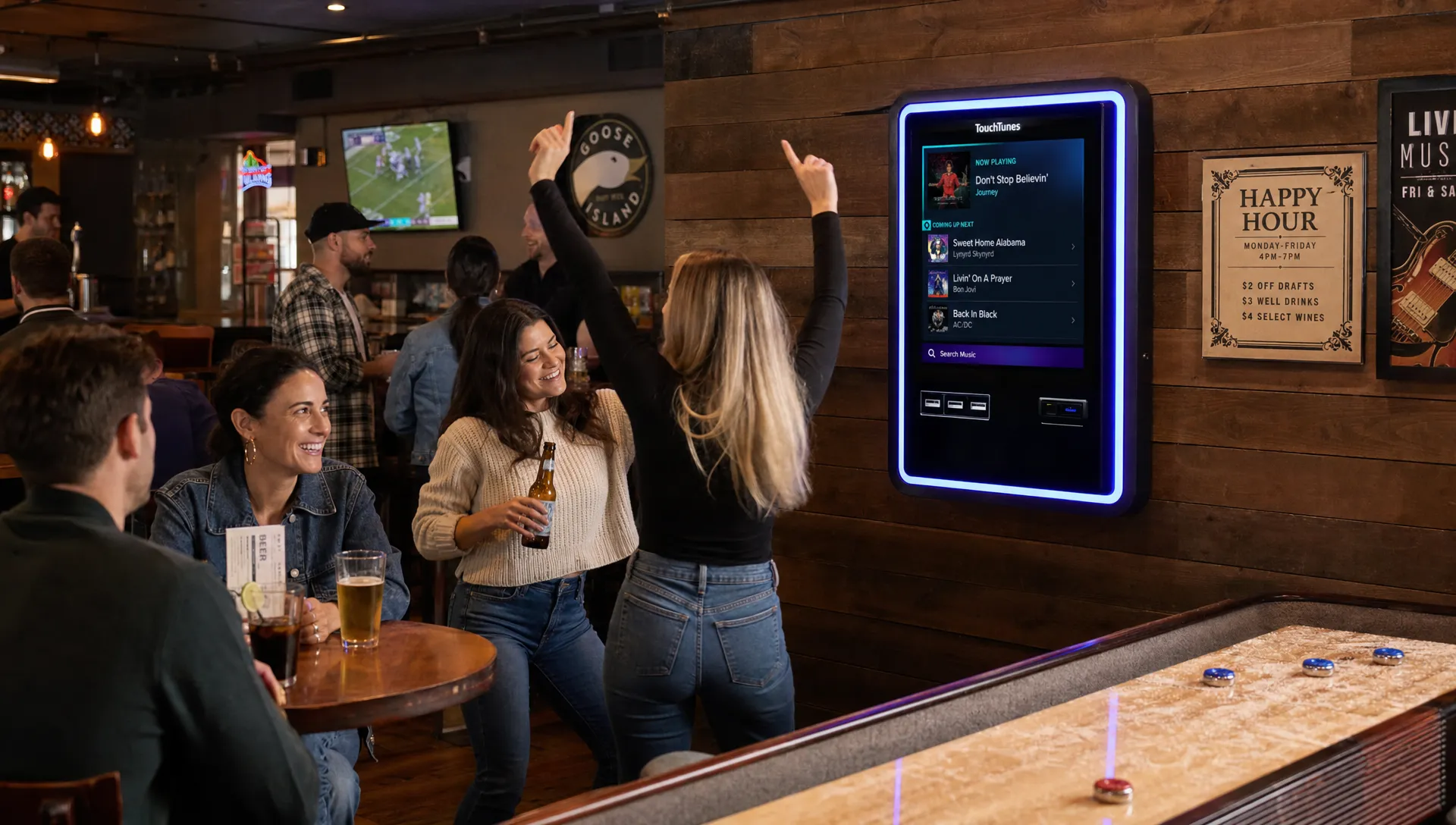
A jukebox app can also help with social spending. One guest buys a song, another responds with a better one, and suddenly the music becomes part of the group dynamic. This can happen at birthdays, team celebrations, after-work gatherings, and late-night crowds. The app makes the behavior visible and easy, which can turn a single music purchase into a chain of small purchases.
How a jukebox app changes different spending levers
A bar owner should not evaluate a jukebox app only by asking, “How much money will the jukebox make?” A better question is, “Where can guest-controlled music improve the total guest experience and support revenue?”
| Spending lever | How the app can change behavior | What bar owners should monitor |
|---|---|---|
| Song credits | Guests can select and pay for music without walking to the jukebox | Plays per night, revenue by daypart, repeat app usage |
| Dwell time | Guests may stay longer because they are waiting for selected songs or enjoying the atmosphere | Average check size, table turns, late-night retention |
| Group participation | Friends can influence the room together, creating social momentum | Busy periods, event nights, birthday and party bookings |
| Cashless behavior | Guests who do not carry cash can still make entertainment purchases | Card and mobile payment share across equipment |
| Repeat visits | Guests may associate the venue with a better, more personal night out | Returning customers, loyalty activity, event attendance |
| Staff efficiency | Fewer music requests go through bartenders or servers | Staff interruptions, service speed, guest complaints |
Why the app experience can reduce staff interruptions
In many bars, guests ask bartenders to change the music. That creates tension. Staff are trying to serve drinks, manage tabs, watch the room, and keep service moving. If every music request goes through the bar, the soundtrack becomes another operational burden.
A jukebox app helps redirect those requests into a structured system. Guests can search for songs, choose what fits the moment, and pay through the proper channel. Staff can focus on hospitality instead of becoming the DJ for every table.
This is especially useful when the venue has different crowds at different times. Happy hour may need classic rock or country. A weekend night may lean toward hip-hop, pop, Latin, dance, or throwbacks. A digital jukebox gives the crowd a voice while still allowing the venue to maintain control through the system’s settings and music policies.
The result is not just more song revenue. It can be smoother service. When bartenders are interrupted less often, they can greet guests faster, fulfill orders more efficiently, and keep the room moving. That operational improvement can support spending even when it is difficult to attribute every dollar directly to the jukebox.
Why licensing and commercial systems still matter
A jukebox app should not be confused with handing the aux cord to the room or playing a personal streaming account over the speakers. Bars and restaurants need to think carefully about commercial music use, licensing, content control, and guest expectations.
If you are comparing a jukebox system with consumer streaming services, it is worth reviewing the practical differences. McGee Amusements has a helpful guide on whether bars can play Spotify legally that explains why personal music services are not the same as a commercial venue solution.
This matters for spending because compliance and reliability protect the guest experience. A system that is designed for a bar environment helps avoid awkward gaps, unauthorized use, or staff-managed playlist chaos. The more consistent the experience, the easier it is to build guest habits around it.
App-powered jukeboxes work best as part of a full entertainment mix
A digital jukebox is often strongest when it supports other reasons to stay. Music gives the room energy, while games, photo moments, sports viewing, and food or drink specials give guests more ways to spend time together.
For example, a group waiting for a pool table might play songs while they wait. A table celebrating a birthday might use the jukebox before taking photos or ordering another round. Sports fans may choose songs during halftime or after a win. The music is not competing with the rest of the venue’s entertainment, it is connecting it.
This is where venue layout becomes important. The jukebox should be visible enough to remind guests that they can control the music, but the app should make the experience available from anywhere in the room. If you already have pool tables, basketball, golf, arcade games, or photo entertainment, the jukebox can serve as the soundtrack that ties those activities together.
For bars in New York and New Jersey exploring a modern digital option, McGee Amusements offers TouchTunes Virtuo jukebox installation as part of its venue entertainment equipment lineup.
What bar owners should measure after adding a jukebox app
To understand how the app changes spending, track more than total jukebox revenue. The best insights come from comparing guest behavior before and after installation, especially by day and time.
Useful metrics include average check size, music revenue by shift, game revenue, dwell time estimates, weekend versus weekday performance, and staff feedback. If Friday late night song plays are strong but Tuesday happy hour is weak, that may not be a problem. It may simply mean different dayparts need different promotion, placement, or atmosphere.
Owners should also watch the connection between music and events. Trivia nights, playoff games, karaoke-adjacent promotions, birthday packages, and industry nights can all change how guests use a jukebox app. A venue may discover that music revenue spikes when groups arrive together, or that certain promotions create a better atmosphere even if direct song revenue is only part of the return.
It is also smart to listen for qualitative signals. Are guests talking about the music? Are bartenders getting fewer playlist requests? Are regulars using the app each time they come in? Are guests staying through the songs they selected? These observations help explain the numbers.
How to encourage spending without hurting the atmosphere
A jukebox app gives guests more control, but the venue still needs a strategy. Too much chaos can weaken the brand of the bar. Too little freedom can make the jukebox feel irrelevant.
Start with the kind of night you want to create. A sports bar may want high-energy, familiar songs. A neighborhood pub may do better with broad crowd-pleasers. A late-night venue may allow a wider range of current hits. The goal is to match the app experience with the room’s identity.
Promotion also matters. Staff can casually mention that guests can pick music from their phone, especially to groups who are celebrating. Signs near the bar, table tents, or a quick mention during private events can help. Keep it simple. Guests do not need a long explanation, just a reminder that they can participate.
Placement still matters even when the app is mobile. A visible digital jukebox acts as a physical cue. Guests see it, understand that music is available, and then use the app when convenient. That combination of visible equipment and mobile access is what makes the experience feel both real and frictionless.
Common mistakes that limit jukebox app revenue
The biggest mistake is treating the jukebox as a set-it-and-forget-it machine. The app may simplify guest participation, but owners still need to think about the crowd, staff awareness, and how music fits the venue’s week.
Another mistake is ignoring volume and speaker quality. If guests pay for songs but the room sounds muddy, too quiet, or painfully loud, they will not value the experience. Music spending depends on the reward being satisfying.
Bars can also miss opportunities by failing to connect the jukebox with peak social moments. Birthday parties, league nights, game days, and late-night rushes are exactly when guests are most likely to make expressive purchases. If staff never mention the music option, those moments can pass unnoticed.
Finally, owners should avoid viewing guest control as all-or-nothing. A good commercial jukebox setup should support the venue’s standards while still giving customers a fun way to participate. The balance between freedom and control is what protects the atmosphere.
Frequently Asked Questions
How does a jukebox app for bars increase spending? It can increase direct spending by making song purchases easier and cashless. It can also support indirect spending by improving atmosphere, increasing guest engagement, and encouraging groups to stay longer.
Is jukebox revenue the only benefit? No. Direct music revenue is important, but many bars benefit from the broader effect on guest experience. A better soundtrack can support drink sales, food orders, game play, event energy, and repeat visits.
Will a jukebox app work for every type of bar? It works best in venues where music is part of the social experience. Neighborhood bars, taverns, sports bars, casual restaurants, and late-night venues often benefit, but the setup should match the crowd and concept.
Do guests still use a physical jukebox if there is an app? Yes, the physical jukebox still acts as a visual reminder and in-venue focal point. The app expands access by letting guests participate from the bar, table, or game area.
Can a bar just use a personal streaming app instead? Personal streaming apps are generally not designed for commercial venue use. Bars should consider licensing, control, reliability, and guest-facing functionality when choosing music systems.
Turn guest music into a stronger revenue opportunity
A jukebox app for bars changes spending because it changes participation. Guests can act on impulse, groups can shape the soundtrack together, and the venue can create a more memorable atmosphere without adding more work for staff.
For bar and restaurant owners in New York and New Jersey, McGee Amusements supplies and installs digital jukeboxes, arcade-style games, photo booths, ATMs, and related entertainment equipment with ongoing support. If you want to make music a more active part of your guest experience, visit McGee Amusements to explore entertainment options for your venue.