
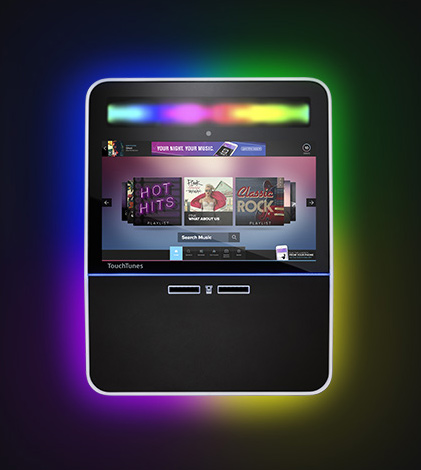
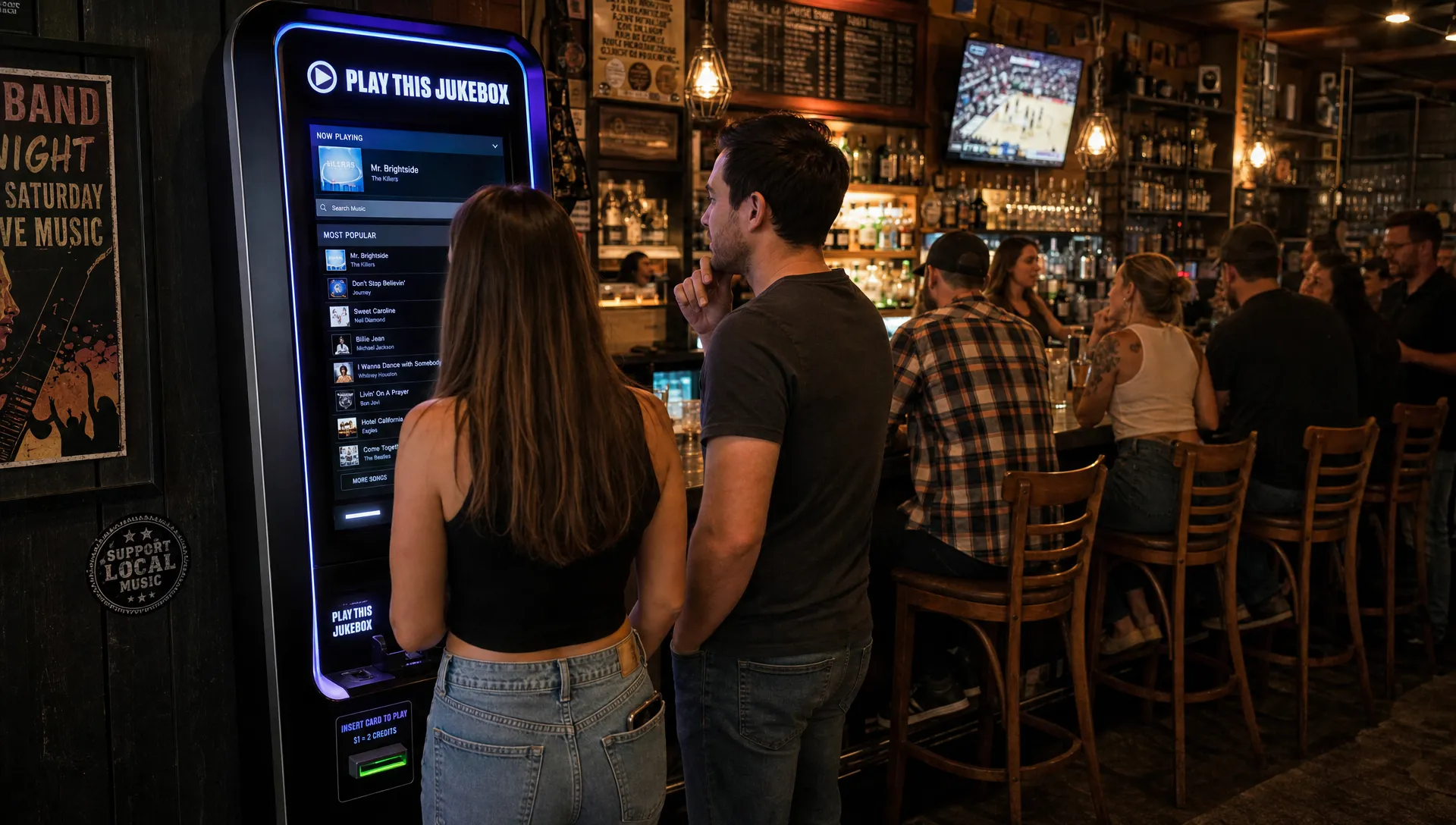
For bar owners, the question is no longer whether the jukebox is “old school.” The better question is whether guests still want a simple way to take part in the atmosphere of the room. In 2026, the answer is still yes, especially when the jukebox is digital, easy to use, and part of a broader entertainment strategy.
A modern jukebox in a bar does more than play songs. It creates paid engagement, gives customers a reason to stay involved, and helps the room feel less generic. In a market where bars are competing with home entertainment, delivery apps, streaming subscriptions, and rising operating costs, that matters.
The jukebox has survived because it solves a very specific business problem: it turns passive background music into an experience guests can participate in.
The jukebox is still a revenue tool, not just a music player
A playlist can fill silence. A jukebox can create interaction.
That distinction is important. When guests choose a song, they are not just paying for audio. They are buying a small moment of control. They get to hear their favorite track in public, share it with friends, change the mood, or start a singalong. That emotional payoff is why a jukebox remains relevant even in an era when every customer has a streaming app in their pocket.
For bars, the revenue benefit usually shows up in two ways. First, there is direct revenue from paid plays. Second, there is the indirect value of a livelier room, longer visits, and more reasons for groups to order another round.
| Revenue lever | How a jukebox helps | Why it matters in 2026 |
|---|---|---|
| Paid song selections | Guests pay to choose music | Creates incremental income without adding staff |
| Longer dwell time | Groups stay engaged with the room | More time can lead to additional food and drink orders |
| Better atmosphere | Music reflects the crowd in real time | Makes the venue feel more social and less generic |
| Off-peak activation | Customers can shape slower nights | Helps create energy when the bar is not packed |
| Repeat visits | Regulars associate songs and memories with the venue | Builds loyalty around experience, not just pricing |
That is why comparing a commercial jukebox to a free playlist misses the point. A playlist is controlled by the house. A jukebox invites the crowd into the night.
Why guests still use jukeboxes when they already have streaming apps
On the surface, it seems strange that people would pay to play music in public when they can stream music privately. But bars are social spaces, and social spaces work differently.
At home, music is personal. In a bar, music is communal. A song choice can become a conversation starter, a joke between friends, a nostalgic moment, or the spark that gets people singing. That public effect is what a personal streaming app cannot replicate.
The modern digital jukebox also fits current customer behavior. Guests are used to mobile payments, touchscreens, apps, and cashless transactions. A digital jukebox gives them a familiar interface while still preserving the classic reward of hearing their chosen song come through the bar speakers.
There is also a status element. When someone pays for a song, especially during a busy night, they are signaling taste. Sometimes they want to make the room laugh. Sometimes they want to set the mood. Sometimes they just want their group to hear “their” song before they leave. That small moment of visibility is part of the appeal.
For regulars, the jukebox can become part of the ritual of visiting. They arrive, order, check the music, pick a few songs, and settle in. Rituals are powerful in hospitality because they make a venue feel familiar.
The legal and operational advantage over consumer streaming
Many bar owners ask a reasonable question: why not just use Spotify, Apple Music, or another consumer streaming service?
The short answer is that personal streaming accounts are generally not designed for public commercial playback. Bars need to think about performance rights, licensing, and terms of service. Organizations such as BMI explain that businesses using music publicly typically need appropriate licensing, and bar owners should take that seriously.
This is not just a legal detail. It is a business risk issue. A music solution that feels cheap at first can become expensive if it creates compliance problems or forces staff to constantly manage playlists, song requests, volume changes, and guest complaints.
A commercial jukebox setup is built for venue use. It gives the bar a more structured way to offer music participation while keeping the experience separate from an employee’s personal account. If you are weighing streaming against a jukebox, McGee Amusements has a helpful guide on whether bars can play Spotify legally that explains the issue in more detail.
The operational benefit is just as important. Staff should be serving guests, not acting as DJs all night. A jukebox gives customers an outlet for requests while allowing the venue to maintain boundaries around what gets played and how the room feels.
How a jukebox increases dwell time and check size
No piece of equipment can guarantee that guests will order more. But the logic behind dwell time is simple: when people are comfortable, entertained, and socially engaged, they are less likely to leave quickly.
Music helps determine whether a room feels alive. If the bar is too quiet, guests may feel awkward. If the music does not match the crowd, the room can feel disconnected. If the soundtrack is controlled entirely by staff, customers may not feel involved.
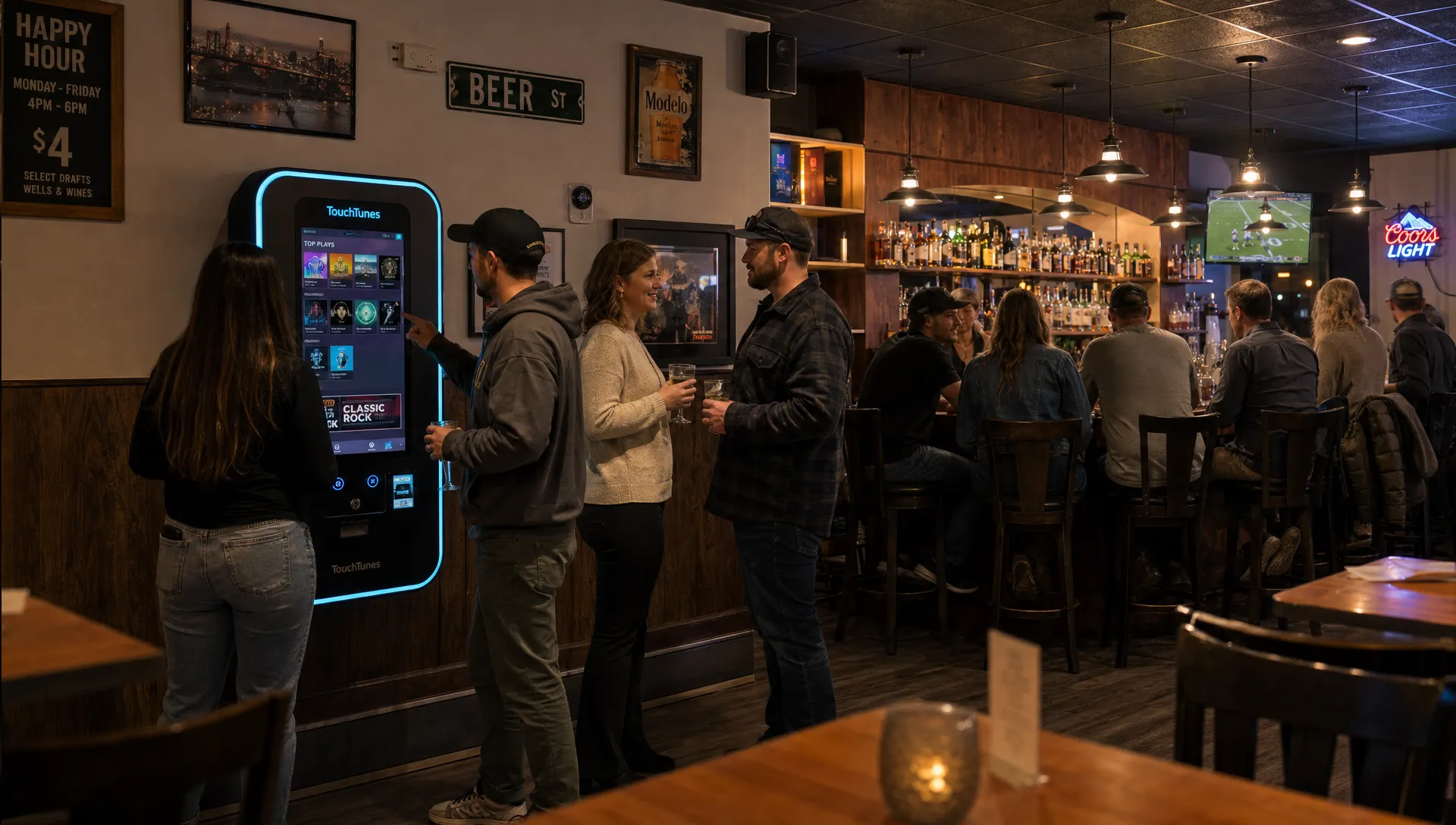
A jukebox gives the crowd a way to participate, which can keep groups engaged between drinks, games, food orders, or sports broadcasts. The key is not volume alone. It is momentum. A well-used jukebox can help create a rhythm where people look up, react to a song, talk about it, and decide to stay for the next part of the night.
For a bar owner, that extra time in the seat matters. A guest who stays 20 minutes longer may order another beer, appetizer, cocktail, or round for the table. Multiply that by multiple groups across multiple nights, and the jukebox becomes part of a broader revenue environment.
This is especially valuable in 2026 because bar margins remain sensitive to labor, rent, insurance, and product costs. Entertainment that can create engagement without requiring another employee on the floor deserves serious consideration.
The best jukebox strategy is not “set it and forget it”
A jukebox works best when the venue treats it as part of the customer experience, not just a box in the corner.
Placement matters. If customers do not notice it, they will not use it. A jukebox should be visible, accessible, and positioned where guests naturally move, without blocking service paths or creating crowding near the bar.
Sound balance matters too. The system should be loud enough to feel like part of the room, but not so loud that it hurts conversation. One of the biggest mistakes bars make with music is treating every hour the same. Early evening, dinner hours, happy hour, game nights, and late-night crowds may need different energy levels.
Promotion also matters. Staff do not need to push the jukebox aggressively, but subtle reminders help. A bartender mentioning, “You can pick the next song over there,” can turn a passive customer into an active participant. Table tents, wall signage, and event-night prompts can also help.
Good jukebox habits include:
- Keeping the area around the jukebox clean, visible, and easy to access.
- Making sure staff understand how the system fits into the guest experience.
- Using music to support different dayparts instead of letting every night feel the same.
- Reviewing customer response over time and adjusting placement, volume, or promotion as needed.
If you are considering a modern system, McGee offers TouchTunes Virtuo jukebox installation in NY and NJ for venues that want a digital jukebox experience supported by an amusement provider.
Jukeboxes work even better when paired with other bar entertainment
A jukebox can be profitable on its own, but it often performs best as part of an entertainment mix. Music, games, photo moments, and sports viewing all support the same goal: keeping guests socially engaged inside the venue.
Think about how customers behave during a night out. One group may play pool while another waits for food. Someone chooses songs while friends take photos. A couple plays a quick arcade game between rounds. These small activities prevent dead time, which helps the venue feel more energetic.
The jukebox is often the soundtrack for everything else. It supports pool tables, basketball games, trivia nights, casual dates, birthday groups, and regulars watching sports. When the music is interactive, the rest of the room can feel more connected.
For example, high-energy bar games like Pop A Shot basketball can pair naturally with a digital jukebox because both encourage participation. One gives guests a physical challenge. The other gives them control over the vibe. Together, they make the bar feel less like a place to simply buy a drink and more like a place to spend time.
What bar owners should measure after adding a jukebox
To understand whether a jukebox is helping, do not rely only on gut feeling. Track the business signals that matter.
Start with direct usage. Are customers selecting songs? Are certain nights stronger than others? Does activity increase during happy hour, late night, weekends, or special events? Your amusement partner can help you understand what information is available from the system or service arrangement.
Then look at venue-level patterns. Compare average check size, dwell time, repeat visits, and sales by daypart before and after installation when possible. You do not need a perfect laboratory test. You need enough practical information to see whether the room is becoming more engaging.
It is also worth listening to staff feedback. Bartenders and servers know when the room feels flat, when guests are interacting, and when music is helping or hurting the night. If the jukebox is reducing song requests directed at staff, that is an operational win too.
Useful signs to watch include:
- Guests talk about songs, react to them, or ask how to play music.
- Regulars use the jukebox as part of their normal visit.
- Slow periods feel less empty because there is more atmosphere.
- Staff spend less time managing music requests manually.
- Groups stay engaged between food, drinks, games, and conversation.
The real question is not whether the jukebox produces revenue in isolation. It is whether it improves the overall revenue environment of the bar.
Why the jukebox still fits the 2026 bar experience
Hospitality trends change, but the core job of a bar has not changed much. People come in to feel something they cannot get alone at home. They want atmosphere, social energy, recognition, and a little unpredictability.
A jukebox delivers all of that in a simple format. It gives customers a voice without giving them control of the entire venue. It helps regulars feel ownership. It gives new visitors an easy way to interact with the space. It adds revenue potential without turning the bar into a nightclub or requiring a live DJ every night.
Most importantly, it helps make the bar memorable. Guests may not remember every drink price or every menu item, but they often remember the song that came on at the right moment.
In 2026, that is still worth money.
Frequently Asked Questions
Does a jukebox in a bar still make money in 2026? Yes, a well-placed digital jukebox can still generate direct revenue from paid plays and indirect value by improving atmosphere, dwell time, and customer engagement. Results depend on foot traffic, placement, promotion, and the overall entertainment mix.
Is a digital jukebox better than a traditional jukebox? For most modern bars, yes. Digital jukeboxes generally fit today’s customer expectations better because they support modern interfaces, broader music access, and cashless-style guest behavior. They also take up less operational attention than manually managed music requests.
Can a bar just use a personal streaming account instead? Personal streaming services are typically not intended for commercial public playback. Bars should review licensing requirements and use music solutions designed for business environments.
Where should a jukebox be placed in a bar? Place it where guests can see and access it easily, but not where it blocks service areas, restrooms, entrances, or high-traffic paths. Visibility and convenience are key to usage.
What types of bars benefit most from a jukebox? Neighborhood bars, taverns, sports bars, casual restaurants, lounges, and venues with regular local traffic can all benefit. The strongest fit is usually a venue where guests stay long enough to interact with the room, not just order and leave.
Bring modern jukebox revenue to your NY or NJ venue
A jukebox is not just a nostalgic add-on. Used well, it is a guest engagement tool that can support revenue, atmosphere, and repeat visits.
McGee Amusements supplies and installs digital jukeboxes, arcade-style games, photo booths, ATMs, and other entertainment equipment for bars and restaurants in New York and New Jersey. If you want to explore whether a modern jukebox belongs in your venue, visit McGee Amusements to learn more about equipment options and support for local bars and restaurants.